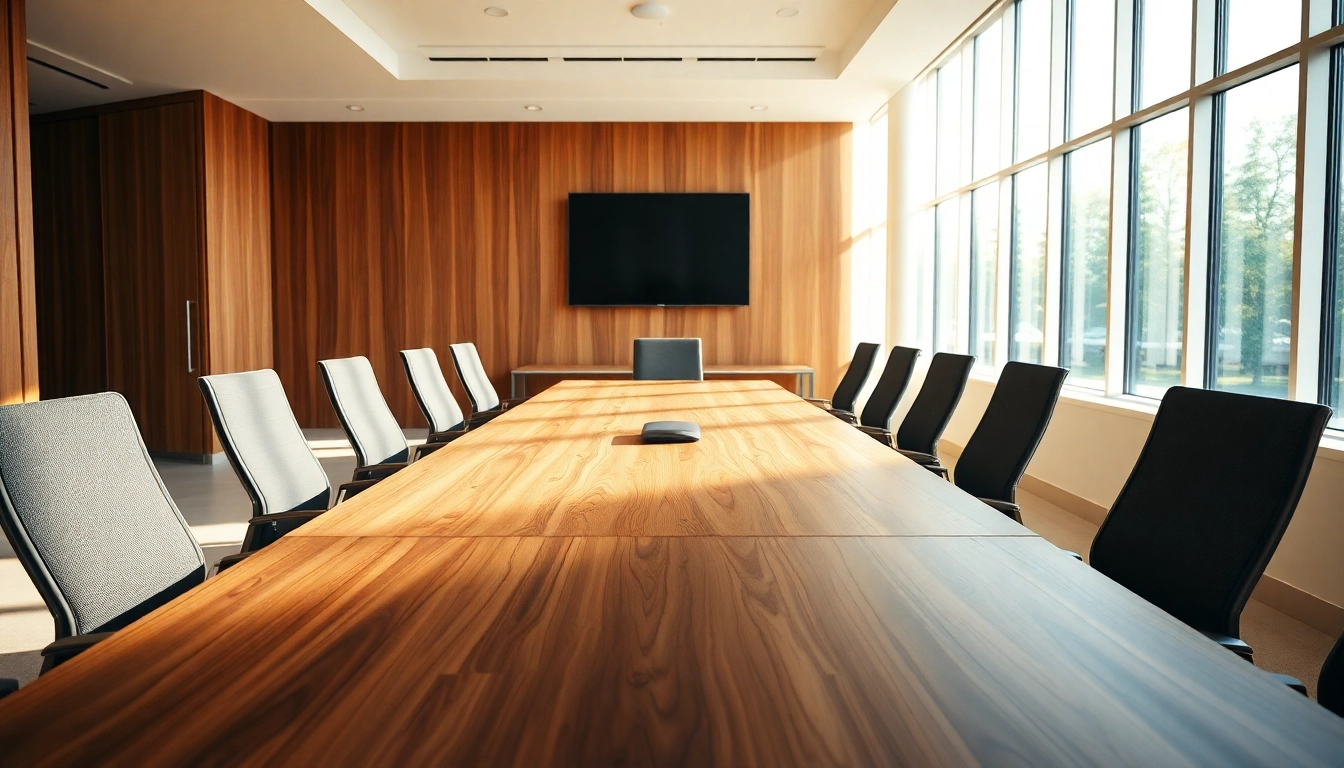
Understanding the Importance of Conference Tables
In today’s fast-paced business environment, the design of conference rooms plays a crucial role in facilitating effective communication and collaboration. Central to this space is the conference table, a key piece of furniture that shapes how teams interact. A well-designed conference table provides not only a functional workspace but also enhances the aesthetic appeal of the room, making it a vital investment for any organization. When exploring options, Conference table choices significantly affect the atmosphere and productivity of meetings.
What is a Conference Table?
A conference table is typically a large table around which meetings, discussions, and collaborative work take place. Distinguished by their size and design, conference tables are not merely functional; they reflect the culture of the organization. Available in various shapes—such as rectangular, oval, and circular—these tables can be crafted from a variety of materials, including wood, glass, and metal, allowing for a blend of functionality and style suitable for any business setting. The choice of design can significantly influence the dynamics of a meeting, from formal boardroom discussions to casual brainstorming sessions.
The Role of Conference Tables in Business Meetings
Conference tables serve multiple purposes in a business setting. They are the focal points for strategic discussions, presentations, and decision-making processes. A thoughtfully designed conference table supports comfortable seating arrangements and efficient use of technology, such as audio-visual equipment, thus enhancing the overall meeting experience. Moreover, the table shape can encourage engagement; for instance, round tables promote equality among participants, while long rectangular tables facilitate a more hierarchical structure suitable for formal meetings.
Key Features to Consider When Selecting a Conference Table
Choosing the right conference table goes beyond aesthetics; it requires consideration of several key features:
- Size: Consider the dimensions of your conference room and the number of attendees typically present during meetings.
- Shape: The shape of the table influences interaction styles. Round tables encourage participation, while rectangular designs can be suitable for presentations.
- Materials: Solid hardwoods, veneers, and laminates not only affect durability but also the visual appeal, reinforcing the company’s brand identity.
- Technology Integration: Power outlets, data ports, and cable management systems are essential for modern conferencing needs.
- Customizability: A conference table that can be tailored to fit specific requirements, such as size and finish, will better meet the unique needs of any business.
Custom Conference Tables: Tailoring to Your Needs
Custom conference tables allow businesses to select designs that resonate with their brand and culture. This adaptability ensures that the furniture can support various meeting styles and preferences, promoting a more effective use of space and resources.
Benefits of Customization for Conference Tables
Opting for a custom conference table provides numerous advantages:
- Personalized Design: Tailored tables can match your office decor, enhancing the overall ambiance of the meeting space.
- Functional Fit: Custom dimensions cater to specific room sizes while ensuring comfortable seating arrangements.
- Brand Integration: Businesses can incorporate branding elements, achieving a cohesive aesthetic in their conference room.
- Enhanced Collaboration: Custom shapes and layouts can facilitate more dynamic interactions, leading to productive discussions.
Materials and Styles: Finding the Perfect Fit
When designing a custom conference table, the choice of materials is paramount. Solid hardwood, such as oak or walnut, offers not just durability but also timeless elegance. For a modern touch, integrating metal elements can create a striking contrast and enhance structural integrity. Additionally, selecting a style that aligns with your corporate culture—be it minimalist, traditional, or avant-garde—can create an inviting atmosphere conducive to productive meetings.
Integrating Technology into Conference Table Designs
As businesses increasingly rely on technology for collaboration, integrating tech solutions into conference tables becomes essential. Options such as built-in power outlets, USB charging ports, and audio-visual equipment connections facilitate seamless presentations and discussions without the clutter of external cables. Some modern designs even include wireless charging surfaces, catering to the rising use of mobile devices in meetings.
Design Inspirations for Your Conference Room
Staying current with design trends not only helps in creating an attractive conference space but also enhances functionality. Here are some trends that are likely to shape conference room designs in 2026:
Top Trends for Conference Tables in 2026
- Sustainable Materials: Increasing awareness about environmental impact is pushing for the use of sustainably sourced materials and eco-friendly finishes.
- Modular Designs: Tables that can be reconfigured easily are gaining popularity as the need for flexible meeting arrangements grows.
- Acoustic Solutions: As collaboration increases, sound-dampening features in conference table designs are essential for maintaining focus.
- Biophilic Design: Incorporating natural elements and views of greenery are becoming integral to reduce stress and enhance well-being.
Case Studies: Successful Conference Room Transformations
Transforming a traditional meeting space into a modern conference room can lead to improved employee engagement and productivity. One notable example is a tech company that replaced its old rectangular tables with modular designs that could be easily adjusted for different meeting formats. This flexibility not only improved interaction but also fostered a culture of teamwork and innovation.
Minimalist vs. Traditional: Which Design Works Best?
The choice between minimalist and traditional designs for conference tables often depends on the corporate identity and meeting objectives. Minimalist designs, characterized by clean lines and functional aesthetics, promote a modern approach to business, suitable for dynamic work environments. Conversely, traditional designs with ornate details and rich wood finishes can convey stability and professionalism, often preferred in industries such as finance and law.
Ordering and Delivery: What to Expect
Once you’ve settled on your custom conference table design, it’s essential to understand the ordering and delivery process to manage expectations effectively.
Lead Times for Custom Conference Tables
Lead times can vary significantly based on the complexity of the design and the materials selected. Custom conference tables typically require 4-12 weeks from order to delivery. It’s advisable to consult with the manufacturer about their specific timelines and consider seasonal fluctuations in demand when planning your project.
Shipping Options and Considerations
When ordering custom conference furniture, shipping options should be carefully considered. Many manufacturers offer nationwide shipping, ensuring that your table arrives in pristine condition, regardless of location. It’s also wise to discuss the packaging and delivery methods to safeguard your investment during transit.
Installation and Setup: Preparing Your Space
Installing your new conference table should be a straightforward process, especially if the manufacturer provides setup services. However, if you handle it internally, ensure that your team is prepared with the necessary tools and instructions. Proper placement can maximize space efficiency and facilitate the best meeting environment.
Maintaining Your Conference Table for Longevity
To ensure that your conference table remains in top condition, regular maintenance is key. Here are some essential tips for care:
Cleaning and Care Tips for Wood Conference Tables
Regular dusting with a soft cloth is crucial to prevent dirt buildup. For deeper cleaning, use a slightly damp cloth with a mild soap solution, avoiding harsh chemicals that can damage the finish. Additionally, applying a suitable wood polish periodically can enhance the table’s luster and protect it from wear and tear.
Common Issues and How to Address Them
Over time, wooden conference tables may develop scratches or dents. Minor scratches can often be repaired with a wood filler or a touch-up kit, while deeper damage might require a professional refinishing. Keeping coasters and mats on the table can also help prevent damage caused by heat and moisture.
Why Investing in Quality Matters
Quality matters when it comes to conference tables, as a well-crafted piece not only enhances the functionality of your workspace but also serves as a visual representation of your organization’s commitment to excellence. Investing in quality furniture pays off in terms of durability, aesthetic appeal, and overall employee satisfaction.